When competition disappears, so does your leverage.
Imagine a town with only one grocery store. The owner knows you have no choice, so prices climb, quality drops, and complaints go nowhere. That's what a monopoly looks like.
The same thing happens in every industry when one company takes too much market share. They stop needing to earn your loyalty, because you have nowhere else to turn.
"Competition is what forces companies to lower prices, improve products, and act ethically. Remove it, and they have no reason to."
This isn't just theory. When markets concentrate, prices rise, innovation slows, and the company's accountability to customers quietly disappears. The rules change, and not in your favor.
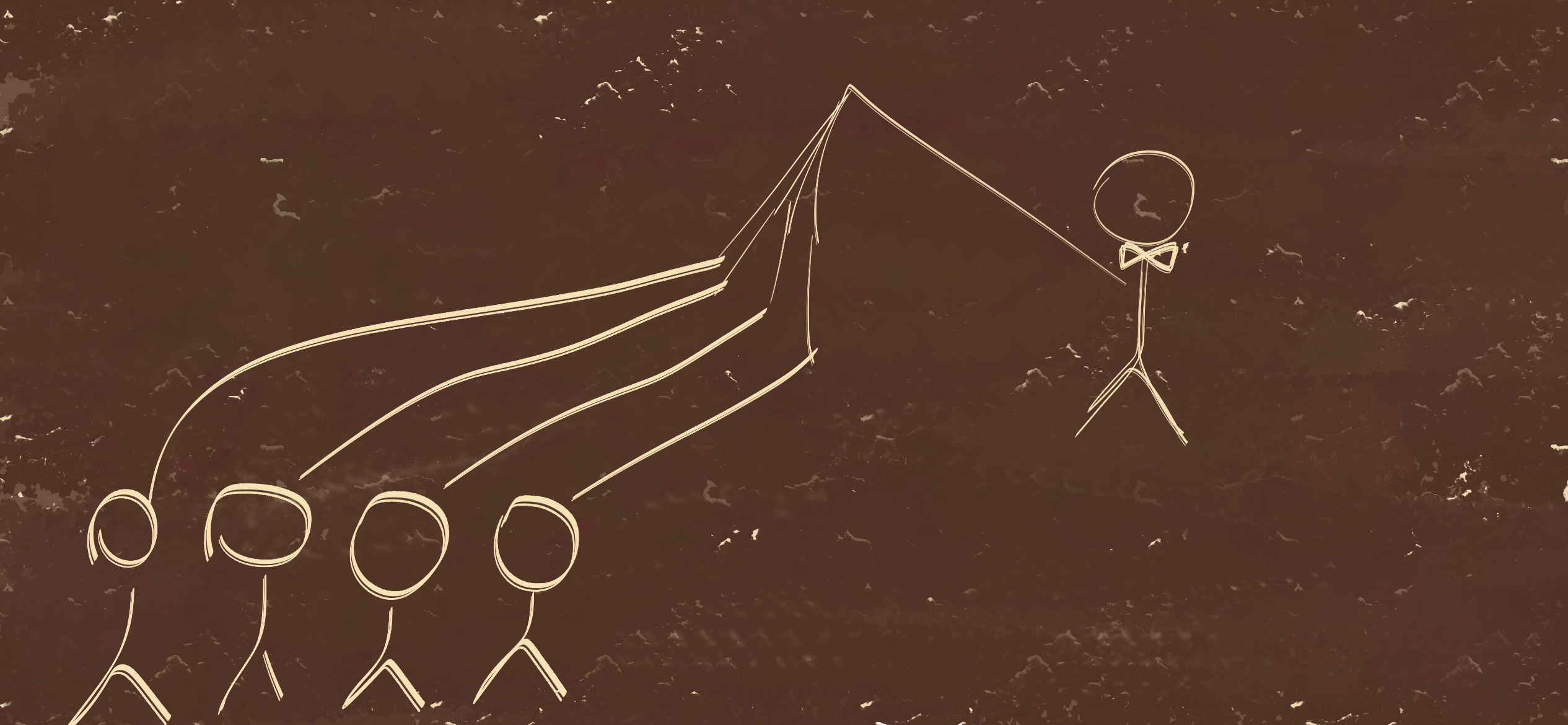
Rivalry is what makes products get better.
Think about how fast smartphones evolved when two giants were constantly outdoing each other. Every year brought something genuinely new, because standing still meant losing customers.
When one company dominates, that urgency disappears. Incremental updates get packaged as revolutions. Prices stay high. And the exciting leaps that come from real competition slow to a crawl.
You deserve products that actually try to impress you, and that only happens when companies have something to lose.
You are not just a consumer. You are the market.
Companies exist because people buy from them. That is the entire foundation. Which means the reverse is also true, people can stop buying from them, and that sends a signal no boardroom can ignore.
When you spread your spending across multiple businesses, even slightly, you help keep the playing field balanced. No single company accumulates the kind of dominance that lets it stop caring about you.
"Every purchase is a vote. Not for a party or a candidate, for the kind of market you want to exist in."
You don't have to boycott anyone. You just have to occasionally choose differently. That's enough to matter.
One company with all your data isn't just an information problem. It's a power problem.
When a single platform knows what you watch, buy, search for, fear, and react to, across billions of people, it gains something unprecedented: the ability to shape what people believe, who they vote for, and what they think is normal.
This is not hypothetical. Research has shown that changes to a social media feed algorithm, invisible to users, can measurably shift political opinions and voter turnout. A company like Meta, serving over 3 billion people daily, has more reach than any newspaper, television network, or government communications channel in history. That reach, concentrated in one place, is an instrument of influence unlike anything that has existed before.
"Whoever controls the algorithm controls what feels true. That's not a technology question, it's a political one."
The same applies to AI. Platforms like OpenAI's ChatGPT are increasingly where people go to form opinions, research decisions, and understand the world. When one AI system dominates how hundreds of millions of people access information, the values, biases, and incentives baked into that system quietly become everyone's reality. A single company deciding what an AI emphasizes, downplays, or refuses to say, at that scale, is a form of editorial control the world has never seen.
This isn't an accusation against any specific company. It's a structural argument. No single entity, however well-intentioned, should have that kind of uncontested influence over public thought. Concentrated market power in media and AI is not just an economic issue. It's a democratic one.
Multiple competing platforms create friction. Different algorithms, different editorial choices, different blind spots that cancel each other out. That messy diversity is not a bug, it's the closest thing we have to a check on what any one company can make you believe.